
What is the septum?
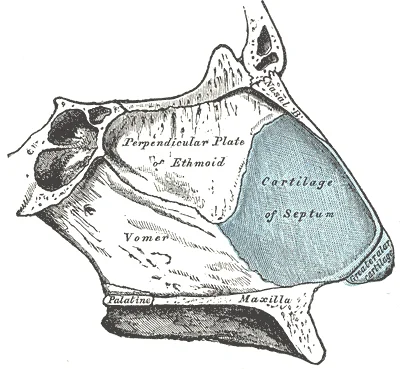
The partition that divides the nasal cavity into a right and a left side is called the septum. The septum is not a single structure: its front part is cartilage, while its back and upper parts are bone. Because these two tissues grow at different rates, the partition can bend to one side during development or after a blow to the nose.
What complaints does a deviated septum cause?
Mild deviations are very common and cause no complaints at all in most people. When a deviation appreciably obstructs the airflow, the following are seen:
- One-sided or two-sided nasal obstruction; one side is usually more marked
- Sleeping with the mouth open, snoring, irregular breathing during sleep
- A dry mouth and the throat complaints that follow from it
- Recurrent sinus infections and headache
- Difficulty in breathing during exercise
- Nosebleeds, because the mucosa over the deviated area becomes thin and dry
The septum may not be the only cause of the obstruction. Allergic rhinitis, enlargement of the turbinates inside the nose, polyps and swelling of the mucosa cause similar complaints. Making this distinction determines the treatment; obstruction due to allergy does not resolve with surgery.
Diagnosis
Assessment begins with examination of the inside of the nose; where necessary, the posterior parts and the turbinates are viewed with an endoscopic examination. Examination before and after a decongestant spray helps to distinguish whether the obstruction arises from the bony and cartilaginous deviation or from swelling of the mucosa.
Where sinus disease is suspected, a CT scan is requested. Where allergy is suspected, the relevant investigations are arranged and, if needed, the opinion of an allergy specialist is sought.
Surgical treatment
Septoplasty is the correction or the removal of the deviated cartilaginous and bony parts. The incisions are made inside the nose; no external scar remains and the outward appearance of the nose does not change.
In cases where it is needed, additional procedures are carried out during the same operation:
- Turbinate reduction. When enlarged turbinates narrow the passage of air, their volume is reduced; this is done in a way that preserves the function of the turbinate.
- Support of the nasal valve. If narrowing at the entrance is the cause of the obstruction, this area is widened with a cartilage graft.
- Septorhinoplasty. If the patient also wants a change in the external appearance, the two procedures are combined. This is a choice that depends on the patient’s own wishes; it is not necessary for breathing alone.
Surgery is generally planned after growth is complete. In children with marked obstruction and sleep problems, limited procedures that preserve growth may be considered.
Surgery and recovery
The procedure is performed under general anaesthesia, or under sedation in suitable cases, and generally takes a short time.
- When silicone tubes that support breathing are used, they are removed within a few days.
- Fullness in the nose, crusting and slight bloody discharge are usual in the first days; saline spray and moisturising are advised.
- Return to daily life is within a few days in most cases.
- The improvement in breathing becomes clear within 2-4 weeks, as the mucosal oedema resolves.
- You will be asked not to blow your nose forcefully and to avoid strenuous exercise for a period.
What to expect
The aim of septoplasty is functional: to improve the passage of air. It does not change the external shape of the nose.
If the obstruction has more than one cause (for example, if allergy is also present), medical treatment may need to continue after surgery as well. This does not mean that the operation has failed; it is the treatment of a different mechanism.
Assessment
The right step in nasal obstruction is to distinguish the cause. Some patients do not need surgery; medical treatment and the management of allergy are enough.
If you have difficulty in breathing, you are welcome to book an appointment for assessment; it is helpful to bring the nasal sprays you use and, if you have them, your allergy test results.